
Why More Homeowners Are Choosing to Downsize
The word "downsizing" sounds like a loss. In my experience, it is usually the opposite. For most of the people I work with, moving to a smaller or simpler home is about gaining something: time, freedom, financial breathing room, or simply being closer to the people they love.
It is also one of the biggest trends shaping today's housing market. Here is what is happening, why, and what it means if you or someone you love is thinking about this next chapter.
Older Homeowners Are Driving the Market
Baby boomers are now the single biggest force in real estate. According to the National Association of REALTORS® 2026 Generational Trends report, buyers ages 61 to 79 made up 42% of all home buyers and 55% of all home sellers, the largest share of any generation on both sides of the transaction.
They also tend to stay put a long time. Older boomers (ages 71 to 79) typically lived in their homes for about 15 years before selling. That long tenure often means substantial equity, and it means the decision to move carries decades of memories along with it.
There is also a lot of space at stake. A Redfin analysis found that empty-nest boomers own about 28% of the country's homes with three or more bedrooms, compared with 16% owned by millennial families with children. Looking ahead, Fannie Mae projects that 13 to nearly 15 million older homeowners will leave homeownership between 2026 and 2036.
It's Not Always About Going Smaller
Here is the part that surprises people: today's "downsizing" often isn't about square footage at all. Many older buyers are right-sizing, choosing a home that fits how they want to live now. That might mean a single-level floor plan, a smaller yard, a lock-and-leave townhome, or a home with a guest suite for visiting grandchildren.
Some are even buying larger homes designed to host family or care for an aging parent. And many are choosing to stay right where they are. The common thread is intention: people are making housing decisions around this season of life, not the last one.
Why People Are Making the Move
Every story is different, but a few reasons come up again and again.
To be closer to family. This is one of the most heartfelt drivers. NAR found that 31% of older boomers and 23% of younger boomers bought homes to be closer to friends and family. Grandchildren, adult children, and lifelong friends pull people across town and across the country.
To unlock equity. Many longtime owners have built significant equity. Selling can free up cash for retirement, travel, healthcare, or helping family, and it often allows a buyer to purchase the next home with cash or a much smaller loan.
To lighten the load. Stairs, gutters, lawns, and rooms that no one uses anymore all take time, money, and energy. A simpler home means less upkeep and more freedom.
To plan ahead. Many people want to make this decision on their own terms, while they are healthy and active, rather than in a rush during a crisis. A home with single-level living and accessible features can support aging in place for years to come.
To change how they live. Walkable neighborhoods, active-adult communities, golf, the coast, the mountains: for many, this is the chapter they have been waiting for.
What Today's Downsizers Are Looking For
The homes in demand among right-sizers share a few common features:
- A primary bedroom on the main floor, or fully single-level living
- Low-maintenance yards, or HOA-maintained exteriors
- Open, light-filled layouts that are easy to move through
- A guest room or flex space for visiting family, hobbies, or a home office
- Proximity to healthcare, shopping, and family
- Active-adult and 55+ communities with built-in social life
NAR reports that 17% of buyers over 60 purchased a home in senior-related housing, and for many, it feels less like a dramatic downsizing and more like settling into a lifestyle that fits.
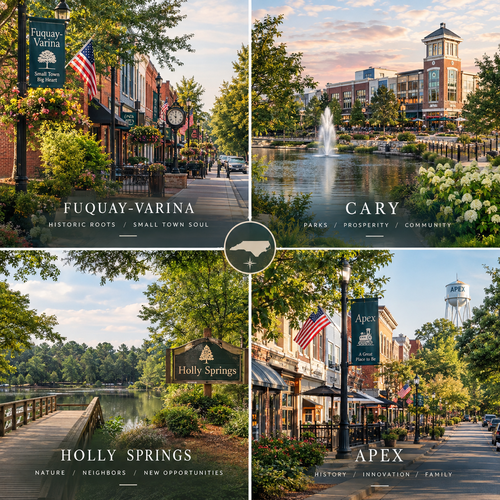
Here in the Triangle, these buyers have wonderful options, from established neighborhoods in Cary and Apex to newer single-level and active-adult communities in Holly Springs, Fuquay-Varina, and beyond. The area also draws families relocating to be near children and grandchildren who have already put down roots here.
The Part No One Talks About
Leaving a longtime home is rarely just a real estate decision. The kitchen where holidays happened, the doorframe with the kids' heights penciled in, the garden planted years ago: these things matter. It is normal to feel excited and sad at the same time.
A few things make the transition easier:
- Start early. Give yourself time to sort, decide, and say goodbye without pressure.
- Define what matters most. Location, layout, budget, community. Knowing your priorities makes every other decision simpler.
- Decide on the order of operations. Buy first or sell first? Bridge loans and other tools can help you avoid moving twice.
- Bring in the right team. A real estate professional, financial advisor, estate attorney, and a senior move manager can each play a role.
- Include family, but keep the decision yours. Loved ones can be a wonderful support, especially when they live out of town and need a trusted local partner.
Your Next Chapter, Thoughtfully Planned
I have spent much of my life alongside seniors and their families, through volunteering, my years in trusts and estates, and serving as my own family's trustee. I understand both the emotions and the processes involved, and I know that the right plan can turn a daunting move into a hopeful one.
Whether you are ready to make a move or just beginning to think about it, I would love to talk. We will look at your options together and map out a plan, one step at a time.
Sources
- NAR: Baby Boomers Remain Largest Share of Home Buyers
- NAR: Equity-Rich Buyers and Sellers Are Driving Today's Housing Market
- NAR: Baby Boomers Are Dominating Today's Market
- NAR: Settling In, Not Slowing Down: Buyers 60+ by the Numbers
- Quartz: Where Empty-Nest Boomers Own the Most Family Homes (Redfin data)
- Mile High Title Guy: Fannie Mae projection on older homeowners
- Newser: More Boomers Ditching the Memo on Downsizing
Check out this article next