
Why Walkable Towns Are Having a Moment (And Why That's Good for You)
For decades, American town planning followed a simple formula: separate everything, then connect it with roads. Homes over here, shopping over there, work somewhere else entirely — all stitched together by cars. It worked, in the sense that it got built. But something got lost along the way, and people are starting to notice.
Walkable towns are back in style, and it's not just nostalgia. It's a genuine shift in what people want out of where they live — and there's a growing body of evidence that says they're right to want it.
The Trend Is Real
Search for "walkable neighborhoods" and you'll find real estate listings leading with proximity to greenways before square footage. Zillow and Redfin both track "walk scores" now because buyers ask for them. Towns that once prioritized wide roads and ample parking are investing in sidewalks, bike lanes, and mixed-use development instead.
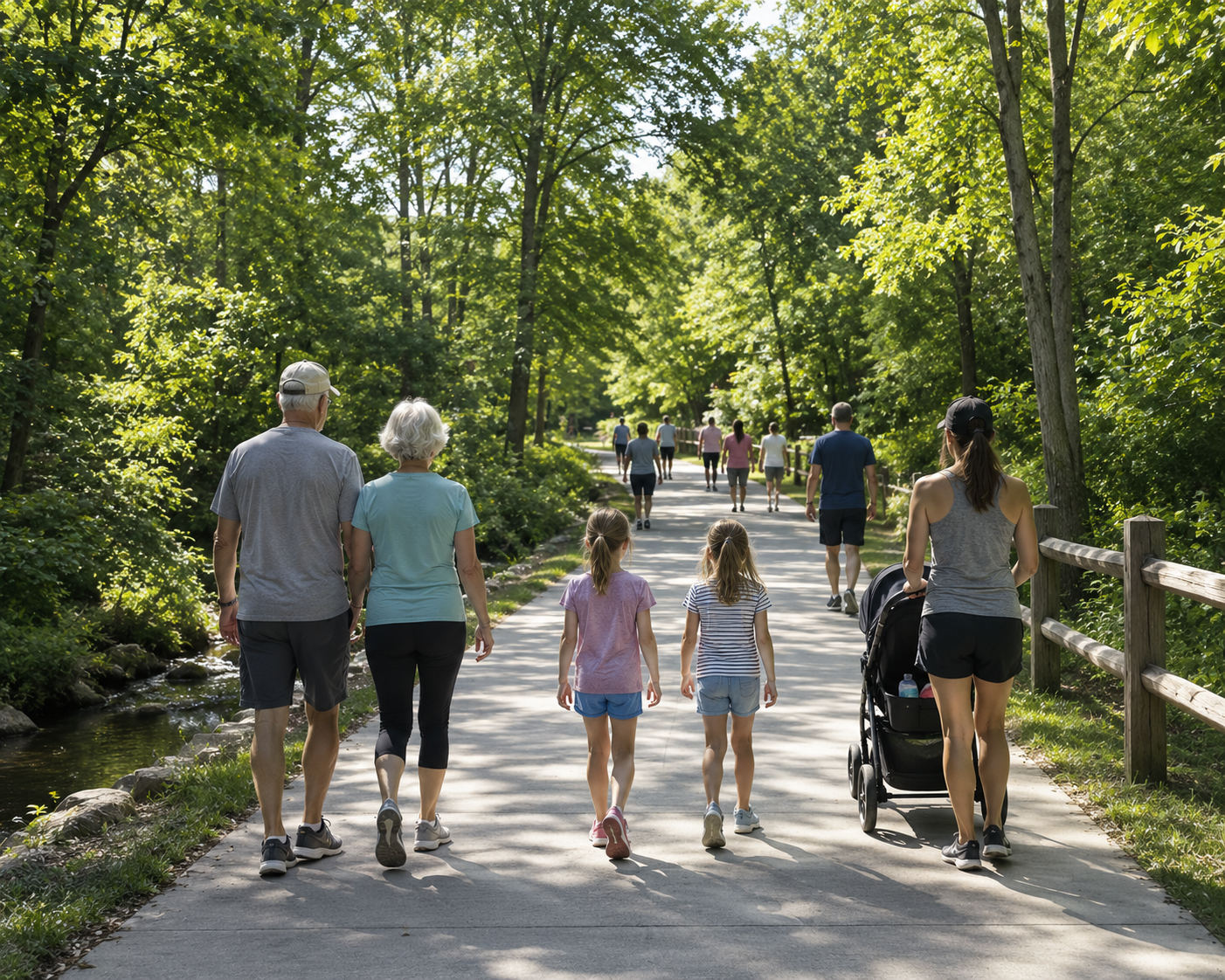
This isn't limited to big coastal cities anymore. Mid-size towns across the country — including plenty in fast-growing regions like North Carolina's Triangle — are redesigning downtowns, adding greenway networks, and building neighborhoods where errands don't require starting a car. The appeal is obvious once you experience it: a walk to coffee, a walk to school pickup, a walk to dinner. Fewer transitions in and out of a vehicle, more time actually moving through your own town.
The Health Case Is Stronger Than You Might Think
Walking is one of the most well-studied forms of physical activity there is, and the research keeps pointing the same direction: people who live in walkable environments simply move more, without having to think about it as "exercise."
That matters because most health guidance around movement fails for a simple reason — it asks people to add something extra to an already full day. A walkable neighborhood removes that friction. The walk to the coffee shop is the workout. The walk to drop the kids off is the movement. It's built into the day instead of squeezed onto a to-do list.
The physical benefits are well established — cardiovascular health, weight management, better sleep. But the mental health side is just as significant, and less talked about. Regular walking is linked to lower rates of anxiety and depression, better mood regulation, and improved cognitive function. There's also a social layer: walkable places create more chance encounters with neighbors, more foot traffic in local shops, and more of the small, low-stakes interactions that build a sense of community — something that's harder to come by when every trip is a solo drive from garage to garage.
Why It's Especially Relevant Now
A few things are converging at once. Remote and hybrid work means more people are home during the day, making a walkable environment matter more than it used to when everyone commuted out each morning. Rising awareness around mental health has people looking for lower-effort ways to support it. And a lot of the towns growing fastest right now are the ones that got ahead of this shift early — investing in greenways and walkable downtowns before demand caught up to supply.
The towns that figured this out aren't just nicer to live in. They're often healthier places to live in, in ways residents feel even if they can't quite name why.
The Bigger Picture
Walkability isn't a luxury amenity or a trend that will fade. It's a return to something that used to be normal — towns built at a human scale, where you could get most of what you needed on foot, and where movement was simply part of daily life rather than a separate obligation.
The towns leaning into this now are betting that residents want that back. Based on the data — and the number of people actively seeking it out — that bet looks like a good one.
Check out this article next